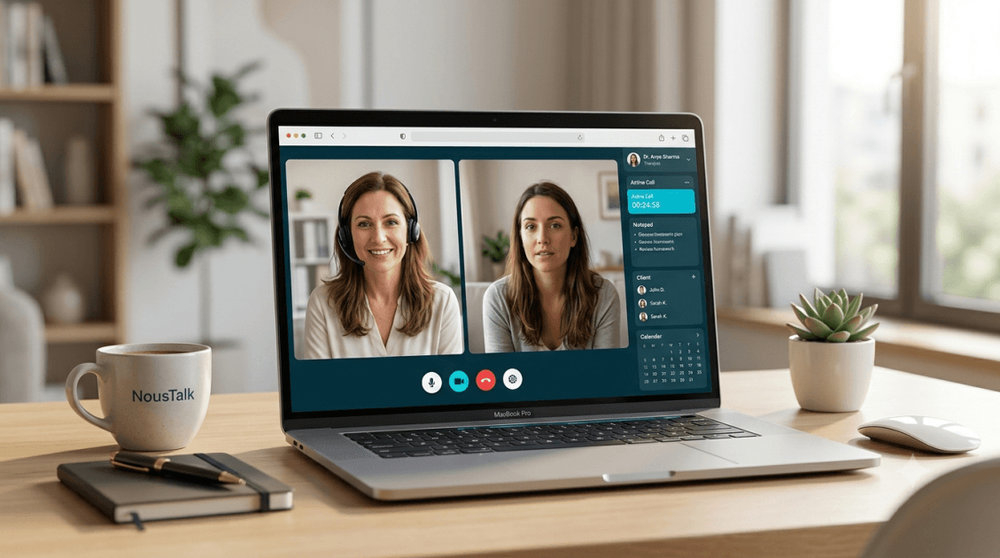
Benefits of Video Sessions in Telehealth Platforms
Introduction
Telehealth has rapidly transformed how healthcare providers connect with clients, making virtual care an essential part of modern clinical practice. High-quality video sessions now enable secure, real-time communication directly through web browsers, eliminating the need for complex setups.
For healthcare platforms like NousTalk, video sessions play a crucial role in delivering efficient, accessible, and secure virtual consultations between providers and clients.
1. No Downloads or Installations Required
One of the biggest advantages of modern video sessions is that they work directly within a web browser. Clients do not need to install third-party software or applications to join a session.
This simplifies the onboarding process and removes technical barriers that often prevent clients from attending virtual appointments.
With a single click, users can join their scheduled session instantly, making telehealth more accessible to individuals who may not be tech-savvy.
2. High-Quality, Low-Latency Communication
Modern video technology supports real-time audio and video streaming with minimal delay. This ensures smooth interaction between healthcare providers and clients during virtual consultations.
Clear communication is critical in healthcare settings, especially for:
Mental health therapy sessions
Clinical assessments
Follow-up consultations
Treatment planning discussions
Low-latency video sessions allow providers to observe client behavior, expressions, and responses accurately, helping maintain the quality of care even in remote environments.
3. Adaptive Streaming for Network Conditions
Internet connectivity varies significantly across users and locations. Advanced video systems automatically adjust quality based on available bandwidth to prevent session interruptions or call drops.
This ensures:
Continuous session flow
Reduced buffering
Stable communication
Better user experience
As a result, healthcare providers can conduct uninterrupted consultations even when clients are using moderate or fluctuating internet connections.
4. Enhanced Security and Privacy
Security is a top priority in telehealth platforms. Modern video communication systems use built-in encryption to protect audio, video, and data during transmission.
This helps healthcare platforms:
Maintain client confidentiality
Prevent unauthorized access
Protect session data
Meet compliance requirements such as HIPAA
Secure communication builds trust between providers and clients while ensuring that sensitive medical information remains protected.
5. Real-Time Collaboration Tools
Video sessions can be enhanced with interactive features such as:
Screen sharing
Digital whiteboards
Document sharing
Group therapy support
These tools enable providers to explain treatment plans visually, share resources, and engage clients more effectively during virtual sessions.
6. Cross-Platform Accessibility
Telehealth video sessions are accessible across:
Desktop devices
Mobile phones
Tablets
Web browsers
This ensures that clients can attend their sessions from anywhere, improving attendance rates and reducing missed appointments.
7. Scalable for Group Sessions
Healthcare providers often conduct:
Family therapy
Group counseling
Team-based consultations
Modern video platforms support multi-participant sessions, allowing multiple users to join the same consultation securely and efficiently.
Conclusion
Video sessions have become a cornerstone of modern telehealth platforms by enabling secure, reliable, and real-time virtual care delivery. By eliminating installation requirements, ensuring smooth communication, and supporting advanced collaboration tools, they enhance both provider efficiency and client engagement.
Platforms like NousTalk leverage this technology to deliver seamless telehealth experiences that support clinical workflows, improve accessibility, and maintain high standards of client care in remote healthcare environments.
HD Video Telehealth Platform
HIPAA and PHIPA compliant video therapy sessions with zero downloads required.
Explore Feature Page