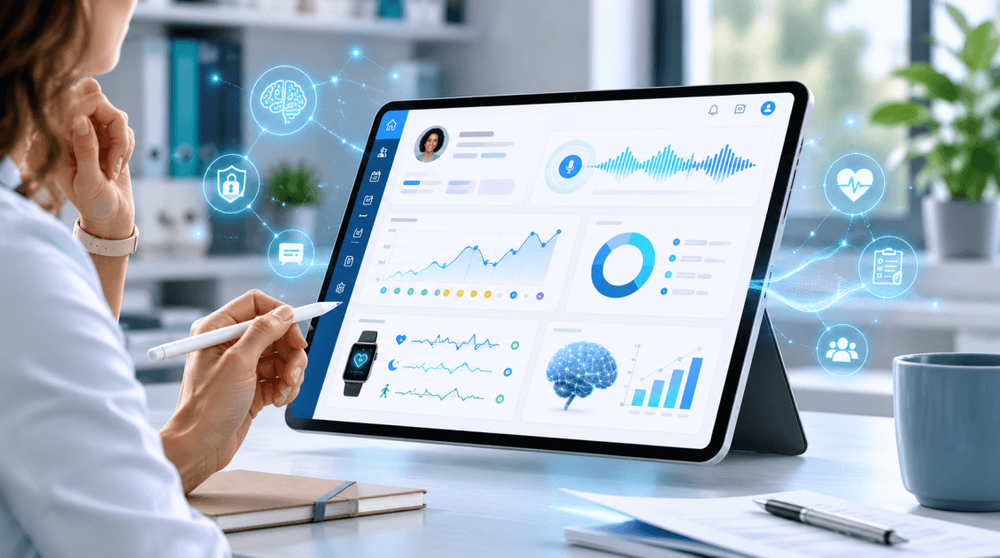
The Future of EMR and EHR: Trends to Watch
The landscape of Electronic Medical Records (EMR) and Electronic Health Records (EHR) is evolving at an unprecedented pace. As healthcare organizations continue their digital transformation journey, emerging technologies and innovative approaches are reshaping how client information is captured, stored, shared, and utilized. Understanding these trends is crucial for healthcare leaders planning their technology roadmap and preparing for the future of healthcare delivery.
Artificial Intelligence and Machine Learning Integration
Artificial intelligence is set to revolutionize EMR/EHR systems in profound ways. AI-powered clinical decision support will move beyond simple alerts to provide sophisticated diagnostic assistance, treatment recommendations based on vast medical literature and real-world evidence, and predictive analytics that identify clients at risk for specific conditions before symptoms appear. Machine learning algorithms will analyze patterns in client data to suggest personalized treatment plans and optimize care pathways. Natural language processing will enable providers to document encounters using voice commands, automatically generating structured clinical notes and coding suggestions. These AI capabilities will reduce documentation burden, improve diagnostic accuracy, and enable more proactive, preventive care.
Voice Recognition and Ambient Documentation
The burden of clinical documentation has long been a source of provider burnout and inefficiency. Ambient clinical intelligence represents a breakthrough solution to this challenge. Advanced voice recognition systems will passively listen to client-provider conversations and automatically generate comprehensive clinical notes without requiring direct dictation. These systems use sophisticated AI to understand medical context, distinguish between clinical information and casual conversation, and structure documentation according to regulatory requirements. Providers will be able to maintain eye contact and engage naturally with clients while the system handles documentation in the background. This technology promises to restore the human element to healthcare encounters while ensuring thorough, accurate record-keeping.
Interoperability and Health Information Exchange
True interoperability remains one of healthcare's most persistent challenges, but significant progress is on the horizon. The adoption of FHIR (Fast Healthcare Interoperability Resources) standards is accelerating, enabling seamless data exchange between disparate systems regardless of vendor. National and regional health information exchanges will become more sophisticated and widespread, creating comprehensive client records that follow individuals across their entire care journey. API-first architectures will allow EMR/EHR systems to easily integrate with third-party applications and emerging healthcare technologies. Blockchain technology may provide secure, decentralized solutions for health information exchange while giving clients greater control over their data. These advances will eliminate information silos and ensure that providers always have access to complete, current client information.
Client-Generated Health Data Integration
The proliferation of wearable devices, health apps, and home monitoring equipment is generating unprecedented volumes of client health data outside traditional clinical settings. Future EMR/EHR systems will seamlessly incorporate this client-generated health data into clinical records. Continuous glucose monitors, smartwatches tracking heart rate and activity, blood pressure monitors, sleep trackers, and medication adherence sensors will all feed real-time information into client charts. AI algorithms will filter and prioritize this data, alerting providers to concerning trends and patterns. This integration will enable more personalized, proactive care based on comprehensive understanding of clients' daily health status rather than snapshots captured during office visits. Remote client monitoring will become standard practice for chronic disease management and post-surgical recovery.
Cloud-Based and Mobile-First Solutions
The shift from on-premise servers to cloud-based EMR/EHR systems will accelerate dramatically. Cloud solutions offer numerous advantages including reduced IT infrastructure costs, automatic updates and maintenance, enhanced disaster recovery and business continuity, unlimited scalability as organizations grow, and anywhere access for providers working across multiple locations or from home. Mobile-first design will become standard, with EMR/EHR interfaces optimized for smartphones and tablets rather than desktop computers. Providers will be able to review charts, place orders, and document care from any location using mobile devices. This flexibility supports evolving care delivery models including telehealth, home visits, and care coordination across distributed teams.
Enhanced Telehealth Integration
The rapid expansion of telehealth during recent years has permanently changed healthcare delivery, and EMR/EHR systems will evolve to support this hybrid care model. Seamless video visit integration will allow virtual appointments to be launched directly from client charts with full access to medical history and documentation tools. Asynchronous telehealth capabilities will enable clients to submit questions, photos, and symptom information for provider review on their schedule. Remote examination tools will transmit data from connected medical devices during virtual visits, enabling thorough assessments without in-person contact. Digital consent forms and e-signatures will streamline administrative processes for telehealth encounters. Future EMR/EHR systems will make no distinction between in-person and virtual care, treating them as equally valid care delivery modalities within a single workflow.
Precision Medicine and Genomics Integration
The era of precision medicine is arriving, and EMR/EHR systems must evolve to support personalized treatment based on individual genetic profiles. Genomic data integration will allow providers to access and interpret clients' genetic information directly within their charts. Clinical decision support tools will suggest medications and dosages based on pharmacogenomic data, avoiding adverse reactions and optimizing therapeutic effectiveness. Family history documentation will become more sophisticated, using genetic risk assessment tools to identify hereditary disease risks. Research capabilities will enable healthcare organizations to participate in genomic studies while advancing personalized medicine. As genetic testing becomes more affordable and widespread, EMR/EHR systems that can effectively utilize this information will be essential for delivering cutting-edge care.
Blockchain for Data Security and Client Control
Blockchain technology offers promising solutions to persistent challenges in healthcare data management. Decentralized health records stored on blockchain networks could give clients unprecedented control over who accesses their information and for what purposes. Immutable audit trails would track every access and modification to health records, enhancing security and accountability. Smart contracts could automate consent management, insurance claims processing, and data sharing agreements. Interoperability would be enhanced as blockchain creates a universal, vendor-neutral layer for health information exchange. While still emerging, blockchain applications in healthcare could fundamentally transform how we think about data ownership, privacy, and security in the coming years.
Social Determinants of Health Tracking
Healthcare is increasingly recognizing that clinical factors represent only part of what influences client health outcomes. Future EMR/EHR systems will incorporate comprehensive tracking of social determinants of health including housing stability, food security, transportation access, employment status, education level, and social support systems. Screening tools will identify clients facing social challenges that impact their health. Community resource databases will be integrated into EMR/EHR systems, allowing providers to connect clients with housing assistance, food programs, transportation services, and other support. Care coordination tools will track referrals to social services and measure outcomes. This holistic approach recognizes that addressing social needs is essential for improving health and reducing disparities.
Advanced Analytics and Population Health Management
EMR/EHR systems will evolve from simple data repositories to sophisticated analytics platforms that drive population health initiatives. Predictive modeling will identify populations at risk for specific conditions, enabling targeted preventive interventions. Risk stratification tools will help organizations allocate resources to clients with the greatest needs. Quality measure dashboards will track performance in real-time, highlighting opportunities for improvement. Cost analytics will identify high-utilizers and opportunities for care optimization. Outcomes tracking will measure the effectiveness of interventions and protocols across client populations. These capabilities will be essential as healthcare continues shifting from volume-based to value-based payment models.
Augmented and Virtual Reality Applications
Emerging technologies like augmented reality and virtual reality are finding innovative applications in healthcare, and future EMR/EHR systems will incorporate these capabilities. AR-enabled medical education will allow providers to visualize client anatomy and pathology in three dimensions directly from imaging data in the chart. Surgical planning tools will use client-specific data to create virtual models for procedure preparation. VR-based therapy sessions for pain management, anxiety treatment, and rehabilitation will be documented and tracked within client records. Remote collaboration will be enhanced through AR interfaces that allow specialists to guide procedures from distant locations. These immersive technologies will enhance both clinical capabilities and medical education.
Enhanced Cybersecurity and Privacy Protection
As cyber threats grow more sophisticated, EMR/EHR systems must employ advanced security measures to protect sensitive client data. Zero-trust architecture will verify every access attempt regardless of source, assuming no user or device is inherently trustworthy. Behavioral analytics will detect unusual access patterns that may indicate compromised accounts or insider threats. Quantum-resistant encryption will protect data against future cryptographic attacks. Privacy-preserving technologies will enable data analysis for research and quality improvement while protecting individual client identities. Automated compliance monitoring will ensure adherence to HIPAA, GDPR, and other regulatory requirements. As data breaches become more costly and damaging, security will be a primary consideration in EMR/EHR selection and management.
Personalized User Interfaces and Workflows
Recognizing that different healthcare providers have different needs and preferences, future EMR/EHR systems will offer highly personalized user experiences. AI-driven interface optimization will learn individual user patterns and preferences, customizing layouts and suggesting frequently used functions. Role-based views will present information and tools most relevant to each provider's specialty and responsibilities. Customizable templates and documentation shortcuts will accommodate diverse practice styles. Integration with personal digital assistants will enable voice-activated navigation and task execution. These personalization capabilities will reduce clicks, minimize navigation time, and allow providers to work in ways that feel natural and efficient for their individual style.
Regulatory Technology and Automated Compliance
The complexity of healthcare regulations continues to grow, and future EMR/EHR systems will incorporate sophisticated regulatory technology to manage compliance automatically. Real-time coding assistance will suggest appropriate billing codes based on documentation, reducing claim denials and audit risk. Quality reporting will be fully automated, with systems generating and submitting required data for MIPS, meaningful use, and other programs without manual intervention. Consent management tools will track and enforce client privacy preferences across all data sharing activities. Audit preparation features will compile required documentation and demonstrate compliance with regulatory requirements. This automation will reduce administrative burden and minimize compliance risk for healthcare organizations.
Preparing for the Future
Healthcare organizations should begin preparing now for these emerging trends. Evaluating current EMR/EHR capabilities and identifying gaps relative to future needs is an important first step. Organizations should prioritize vendors committed to innovation and regular updates when selecting or renewing systems. Investing in staff training and change management will ensure teams can effectively adopt new technologies. Building IT infrastructure that supports cloud computing, AI applications, and integration with emerging technologies is essential. Developing data governance policies that address new types of health information and sharing modalities will protect clients while enabling innovation. Participating in pilot programs and early adoption initiatives can provide competitive advantages and influence product development.
The future of EMR and EHR systems is characterized by intelligence, interoperability, and client-centeredness. These evolving platforms will transcend their origins as digital filing cabinets to become active participants in care delivery, offering real-time guidance, predictive insights, and seamless coordination across the entire healthcare ecosystem. Organizations that embrace these trends and invest strategically in next-generation capabilities will be well-positioned to deliver superior client care, achieve operational excellence, and thrive in an increasingly digital healthcare landscape. The future is not distant but unfolding now, and forward-thinking healthcare leaders are already laying the groundwork for this transformation.
Practice Analytics & Reporting
Track practice growth, client retention, and session metrics in real time.
Explore Feature Page